Jodhpur & Jaisalmer: Blue streets to Golden sands, Part -1
As I am starting to pen down the story of our latest trip to the experience the desert of Rajsthan, a winter tropical rain is bringing in another wet evening just beyond my computer, outside my window glasses through the leafy latticework.
The plan suddenly started getting shape sometime in September, around 2 months back. This led us a not-so-comfortable condition on getting train tickets between Jodhpur and Jaisalmer. Well, all the same, we could manage a comfortable trip.
There is the only nonstop flight from Chennai to Jodhpur operated by IndiGo departing at 7.40 am. So we practically started getting ready around 2.30 am, as, we’re around 2 hours away from Chennai airport. Thus the entire journey till Jodhpur we spent to try somehow to catch some rest wherever we got minimum chance. We got our last free lounge facility to fill ourselves in Chennai airport as the rules are going to change December onwards.
The flight is of around 2:15 hours and while landing I was scanning for the first glimpse of the mighty Mehrangarh fort. I thought its sheer size would definitely make it visible from this height. Well, I was wrong. There was no Mehrangarh on horizon. There was thick fog while landing. And we were almost not knowing where actually we are heading. It was around 10 am or so. Later we came to know, this is common in Jodhpur, sun remains dim throughout winter and provides some heat during noontime only.
Jodhpur airport reminds me of Leh. Its size, presence of army and air force within it and things like those. There was only one passenger flight in the airport when we arrived, and that is ours. Suddenly there was a big sound of a flight taking off when we just came out to the taxi stand. It was revealed that a fighter jet took off to its daily round of border surveillance. As I mentioned, there was a lot of fog then, the jet went out of sight and into the clouds very fast. We were excited that we saw one fighter jet taking off on its actual duty, not the parades and shows that are meant for viewers. But little we knew that this is a regular occurrence over there. So regular that it can’t even be called as an event. During our wait at taxi stand we watched 5 jets took off to their daily routine. Yes, the sensitivity of border is within vicinity.
We came out to fetch a transport to ourselves and there was queue, and much less taxi or auto. There is a counter for issuing taxi or auto coupons. And this counter works in a very special way. The man will see there is a requirement, he will call certain driver, the driver will arrive and the counter man will issue the coupon. No hurry, no tension, no fuss. Only thing, as a tourist, you will get confused like how to get into something, anything, to move on.
We had 2 suitcases, 1 rucksack and 3 smaller backpacks – absolutely ok to fit in an autorickshaw…yes, we didn’t need a 4-wheeler!
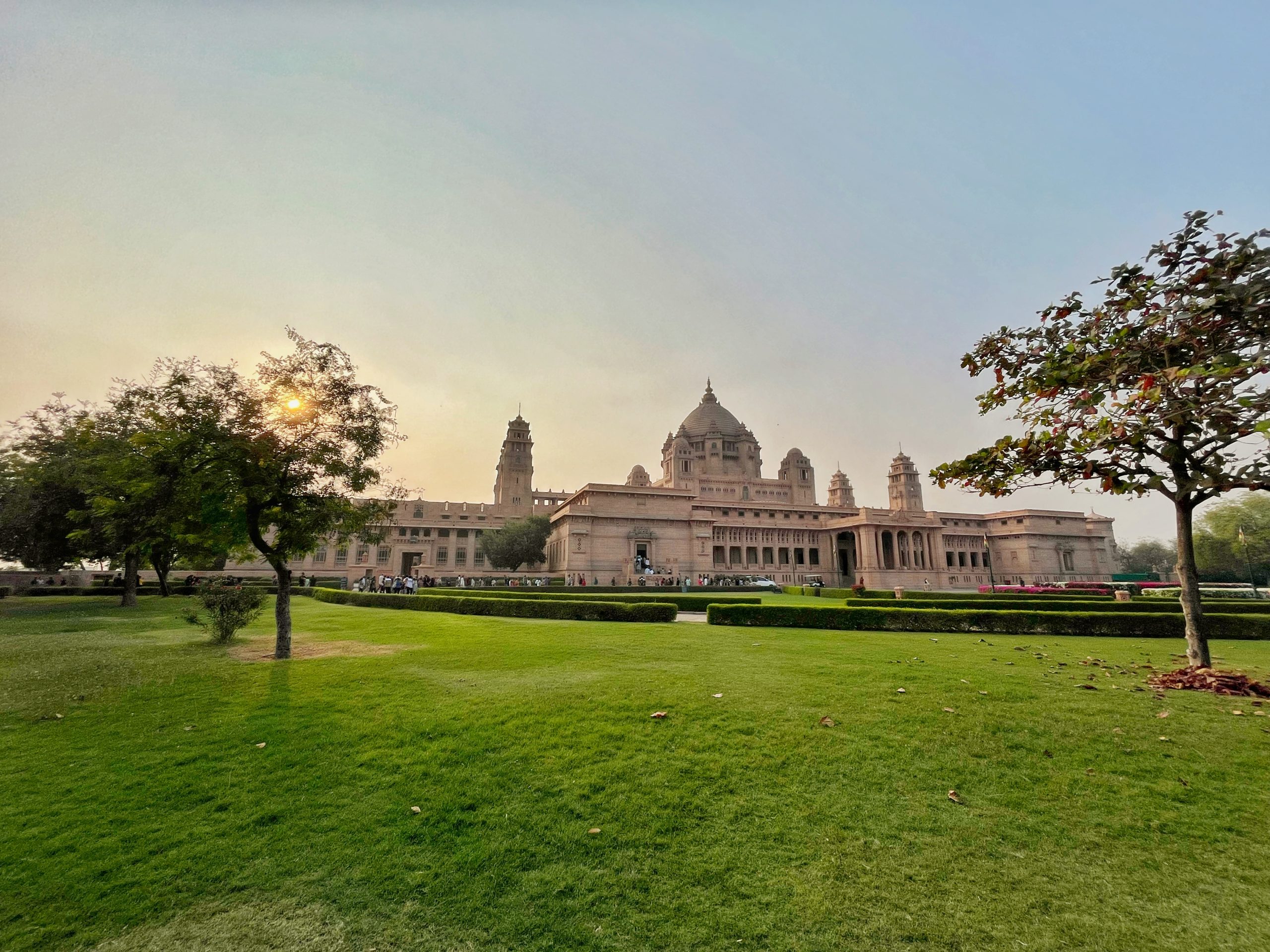
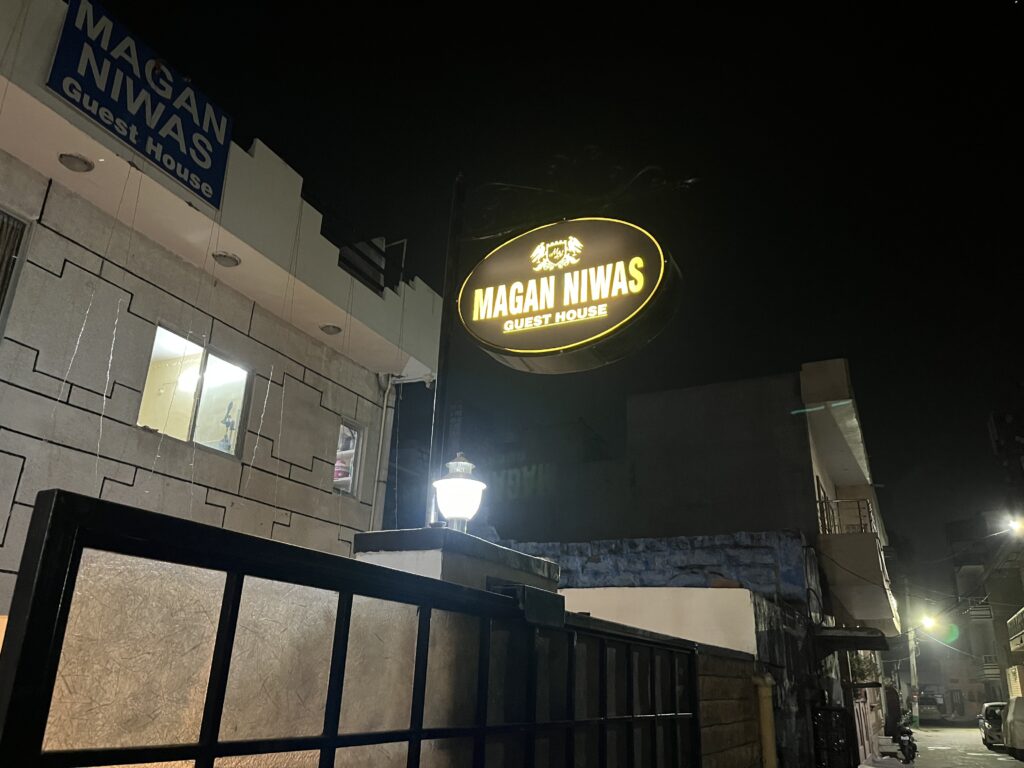
We booked at Magan Niwas Guest House – a perfect option to stay in budget – where we reached by 11 am. On the way from airport to Magan Niwas, in Raika Bagh area, we passed Umaid Bhawan palace peripherals. It’s great in size, but neither imposing as Mehrangarh, nor feast to eyes.
On this very first auto ride, we saluted the traffic navigation skill of the locals. No hit, no fuss, no fight – but people and vehicles are maneuvering within less than an inch gap among themselves. It’s not that the city is so congested, it’s just the way of the city.
Here a bit must be talked on our stay, Magan Niwas. It’s a family-run guest house in Raika Bagh area of Jodhpur. The property has 3 rooms at present. The rooms are well equipped with all essentials of touring life. Humble but elegant décor makes the rooms comfortable. The host family is particularly caring and somehow they make you feel at ease during your stay. We took their bed-n-breakfast package, it can be stay only also if you prefer so. Food is tasty and more importantly comforting, which is a mandate during touring. Boarders can order for lunch, tiffin, dinner etc. from the menu, but it has to be ordered well in advance as the food literally comes from the family kitchen, all curated by Mrs. Uma Rathore, and she needs time to cater the platter.
We came to know Mr. Vikram Rathore owns a fort in Nagaur – we await for him to transfer that ancient property into a heritage homestay. Mrs. Uma Rathore is a princess of erstwhile state of Bundi, and her demeanor shows that prominently.
After freshening (point to note here, till date water is supplied to Jodhpur city only every alternate day, so better to be considerate about using water in this landscape) and lunch, we chalked out our outings in the upcoming days with the help of Mr. Rathore along with his daughter Radhika.
We were to head to Umaid Bhawan Palace on that day, given our lack of energy after travel. We took an auto to the palace. Here a must note point is, this is the only spot in Jodhpur where you have to retain the vehicle during your visit. So charges go high for a hired vehicle, but no other option.
Umaid Bhawan Palace
Umaid Bhawan Palace is grand, but perhaps not in the way you might expect. The story behind its construction is particularly interesting. The palace was built during a terrible famine, with the intention of providing wages and employment to farmers by giving them work as laborers on the project. It is also said to be the last major palace built in India before independence.
Today, a large portion of the palace has been converted into a luxury hotel. When guests arrive, a band plays to welcome them, recreating the traditional royal welcome. The royal family still resides in the palace, in a section separate from the hotel. One wing of the main palace has been converted into a museum, while a heritage car gallery is also open to the public. The exhibits in the museum seem to reflect more elegance than sheer grandeur, offering a glimpse into the refined lifestyle of the erstwhile royal family.
There is also a souvenir shop and a small snacks corner within the premises. Umaid Bhawan Palace remains closed on Mondays and is generally open from around 10 AM to 5 PM. It takes roughly an hour to explore the palace and museum.
It is often said that the hotel section houses some of the palace’s most magnificent furniture and artefacts, which are not accessible to regular visitors. If you can afford a stay there, perhaps you can check for yourself how authentic that claim is!
Ghanta Ghar
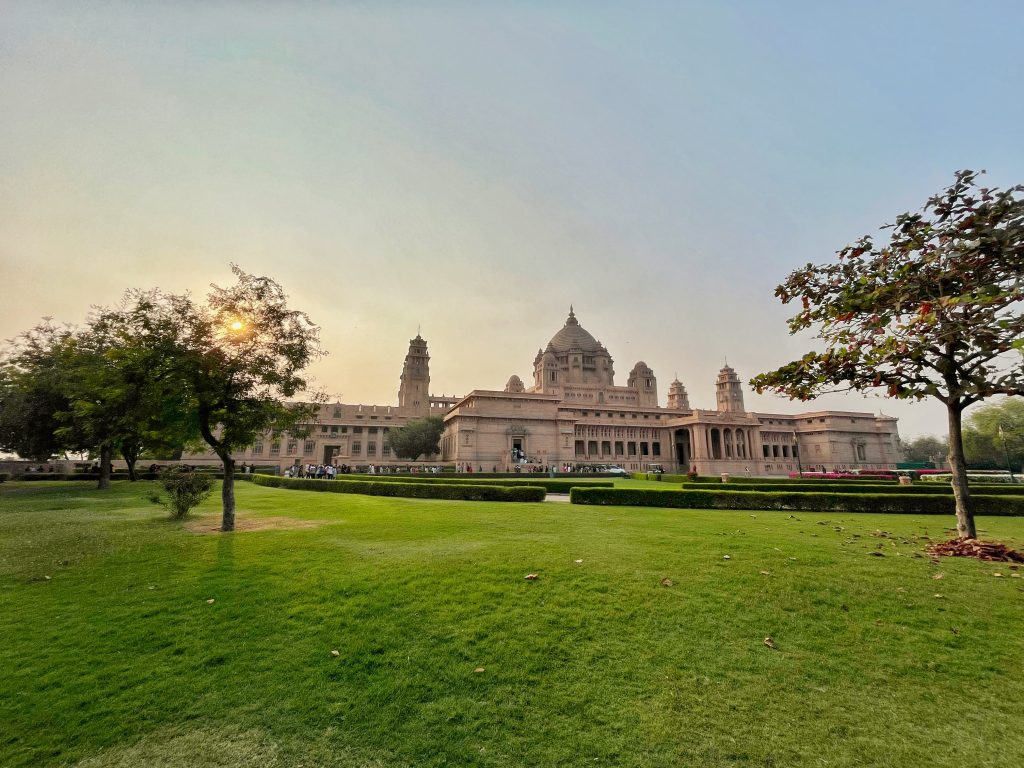
As planned, our auto driver dropped us at Ghanta Ghar or clock tower market junction. This is the city center for Jodhpur city. The market starts from the junction or cross road and stretches till the Clock Tower which is the entrance of the walled city of Jodhpur. The shops around the clock tower circle within the walls make the Sardar market. Thus, though they are both known in terms of the clock tower, clock tower market and sardar market are not same.
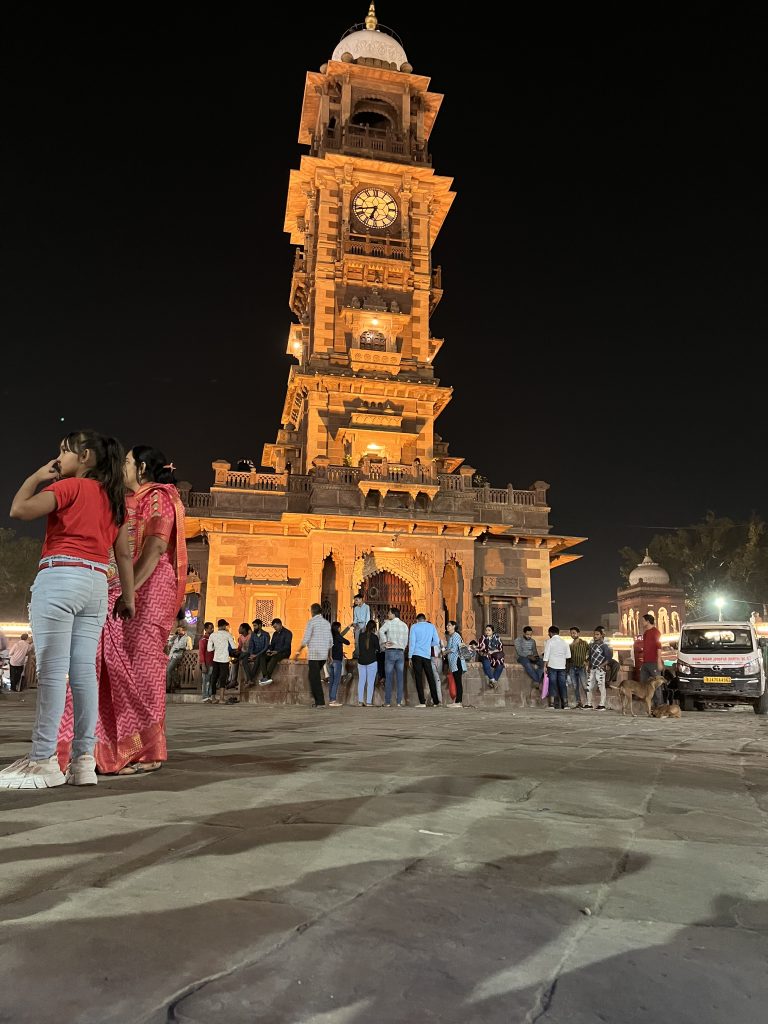
By judging the hustle and our energy level, we decided to leave this place for that day and head to Mochi bazar to hunt for one of our must buys the mojris. We ended up at Jitubhai Mojriwala and got a good procurement. We were told to burgain ruthlessly in Jodhpur. But the prices that are being told in local shops, gave us little chance of bargaining.
We were all hungry and tired. And the region never disappointed our taste buds. We took some samosa chat, samosa, dhokla and bhelpuri from Janta Sweet Home at the cross road and took an auto back to guest house, where we took our simple veg dinner.
Rajasthani Mehendi
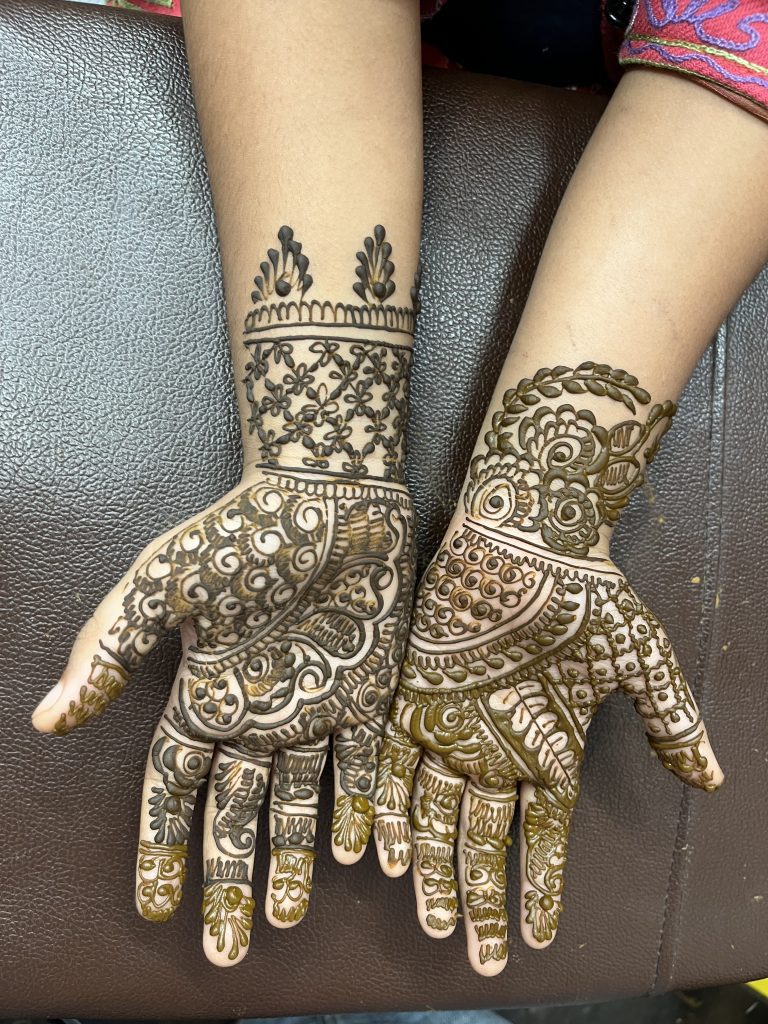
I longed to put on Rajasthani mehendi on my hands. And on this very first day, after finishing our day trip, Radhika took me to a nearby mehendi shop and the longing was satisfied. I’m nothing specialist of mehendi designs, but the outcome came beautiful. This mehendi lady uses her own paste and the color didn’t peel off which is normally happens for store bought mehendi cones.
Bishnoi Village Safari
Next day, we were to go for Bishnoi village safari and visit the surrounding places. This comes in a package form. Some local agency books it for you. The package can include lunch in a Bishnoi home, or just visiting them. We were late to come out and hence skipped the lunch portion of the plan. While on the village track, we could spot a chinkara deer, fearlessly sitting on roadside. They are nurtured by the Bishnoi, hence they don’t fear humans.
On the way to the village we saw a dry canal. The erstwhile Maharaja of Jodhpur started to build it to bring water from Udaipur. Independence came meanwhile and the kings lost their powers. Since then, no government took up this irrigation work till date.
Bishnoi is a community that follows 29 (bish means 20 and nou means 9) rules set by their guru to establish a sustainable clan. The main observations of the community is to be vegetarian, not to cut a live tree, to feed animals, not to keep goats and sheep as pets and though following a version of Hinduism, to burry their dead instead of cremating as the last act of contribution to the nature. It was Bishnoi community that fought against the killing of black cuck by in-famous Bollywood hero. Each family lives in the middle of their own agricultural land. Thus there is always long walking between adjacent households. Their huts, olden ways of lifestyle are very similar to many tribal communities throughout India. They are famous for sacrificing their own lives to save the sangri trees that give them their main staple vegetable, sangri.
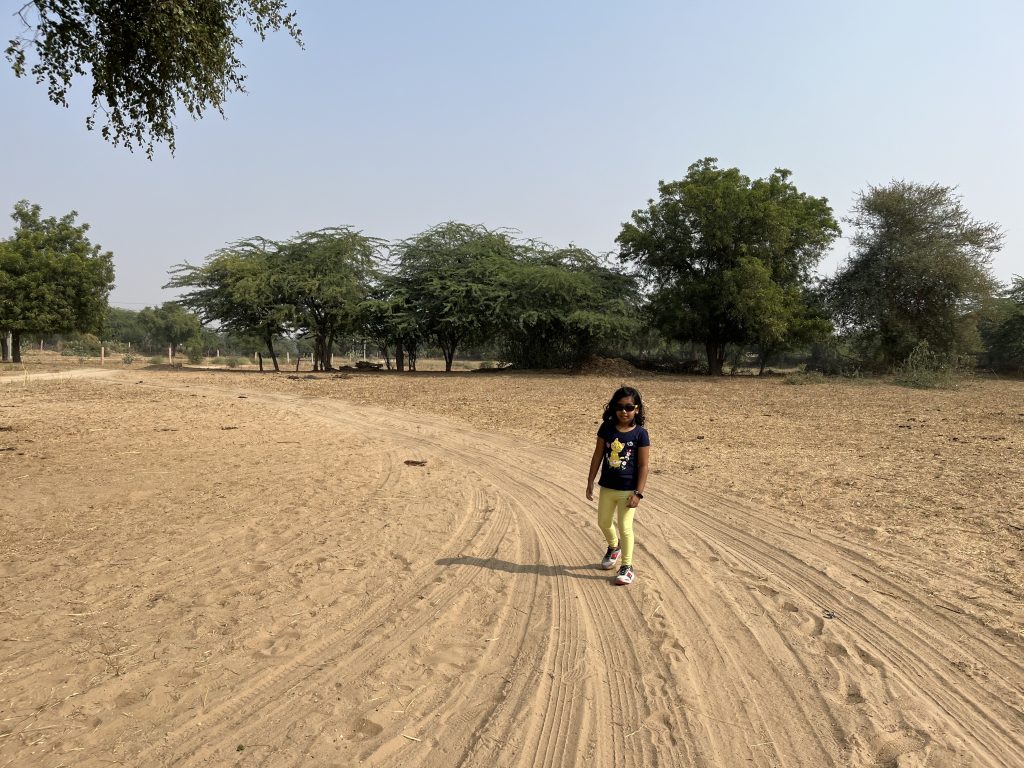
Tourists will be taken to Bishnoi families in a way that each family gets the chance to showcase their life and get paid from the agency that has brought tourists on that day as well as tips from the tourists. Being farmers in a dry land, poverty prevails, hence such helps are welcomed. Other than farming, Bishnois are herders also.
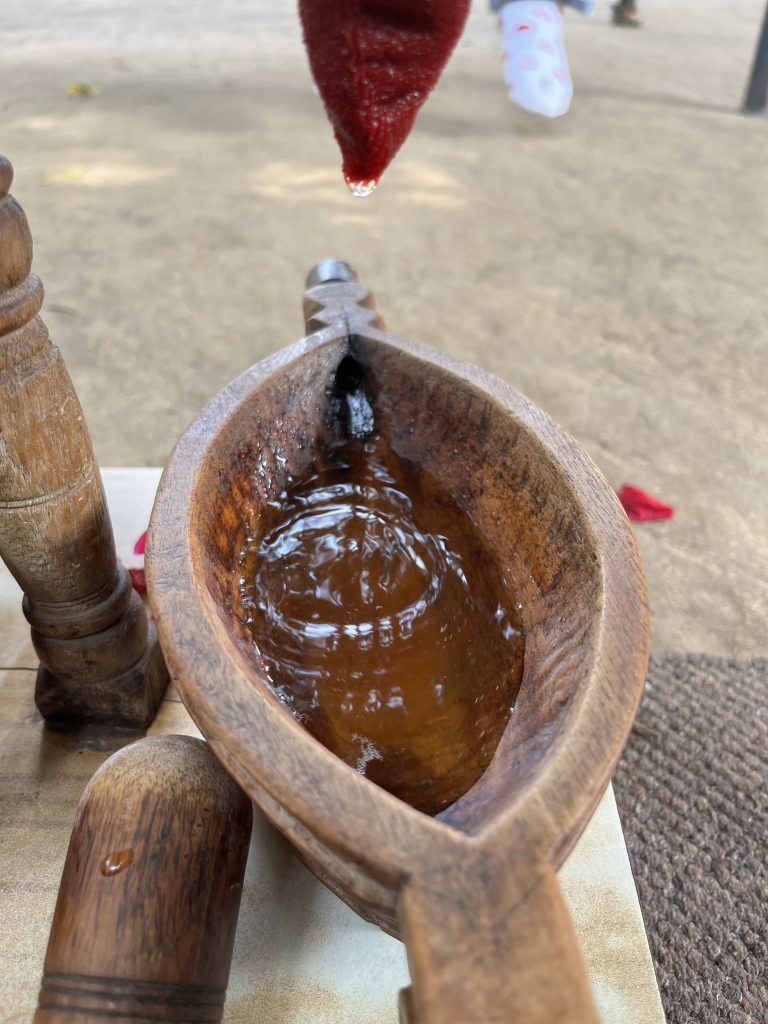
The strange thing that they showcased very proudly is the use of opium in all occasions. They claim it works as medicine to get rid of ailments and pains. Though they also tells that it’s not allowed for women and consumption of this leads to addiction to the extent that is not taken, person falls sick. This justification to opium use is quite unsettling. Especially opium is not indigenous.
Being in Bishnoi village gives a strange tranquility after the buzz of the city markets. It’s nice there.
Siberian cranes
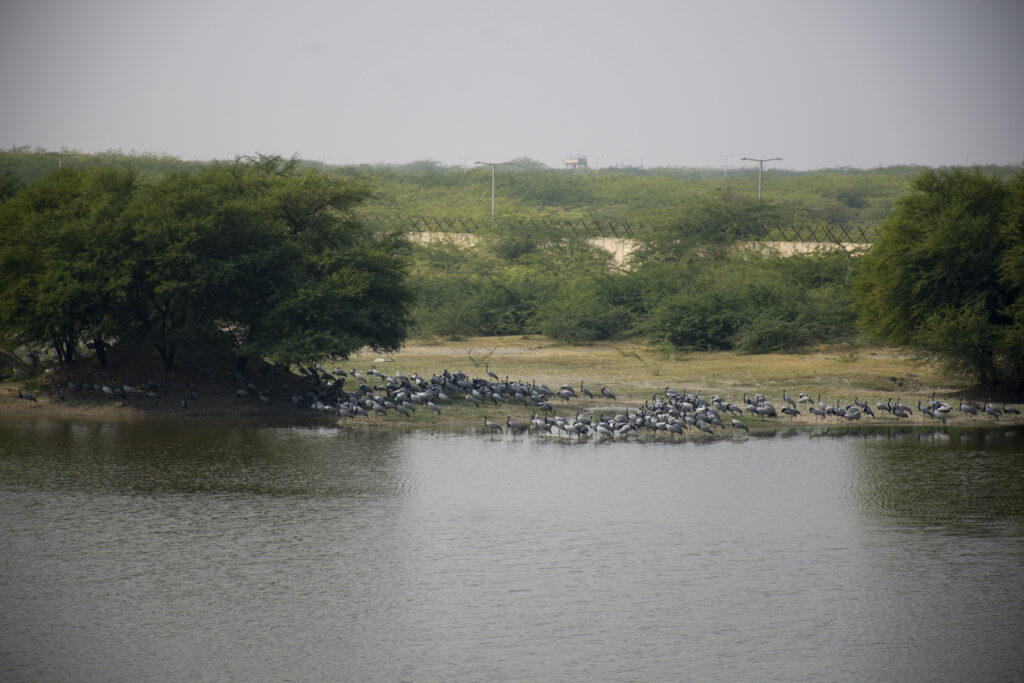
Our next stop was a lake nearby where Siberian cranes come in winter. On the way we tried to look for black buck but didn’t get any. But the drive through the bushy path was enjoyable. There were though 2 juvenile black bucks on the lake shore, with paler coats. Drone is not allowed in Jodhpur. But as this place is out of city area, Sandeep started his drone here. The guards practically chased us out. The air force base is very near and we could be caught by their radar.
Durry Weaving
Durry weaving is spread throughout Rajasthan. I visited durry workshop on my trip to Kumbhalgarh from Udaipur. Here, near Jodhpur, this area is the durry weavers’ settlement. We went to the house which is used as the cooperative outlet of 48 weaver families. Weaving was going on when we reached. From doormat to carpets, durry weaving caters everything. It is an elegance in hotels and shops and restaurants to use durries instead of synthetic carpets. We took 3 durries of different sizes. Durries can be made of cotton, camel wool, coconut fiber, synthetic fiber and any combination of these. The most popular material is cotton.
After durry, now we were heading to the chhipa community area. They are the people whose craft is block printing. Again we visited a family workshop cum sales center. Here only bedsheets were available. We took 2 sets of indigo dabu print. Dabu is quite similar to batik. Instead of using wax in batik, here clay is used to cover up the cloth portions.
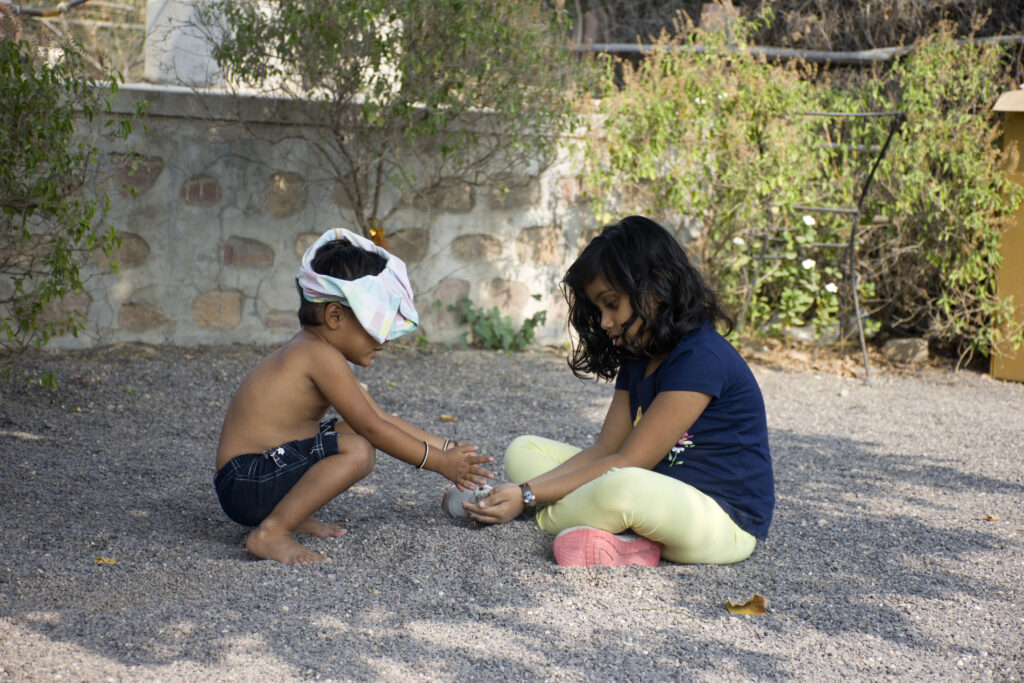
We were actually roaming from community to community throughout the time. Tepu got fantastic play areas everywhere in dry mud. In the weaver home, she got a friend also from their family. So she was getting hungry and tired, but was managing with bananas and freedom. But now, after the block print workshop, we were all exhausted. We needed food. Point to note here is, food is not so easily available any time any place as per your choice. So plan for it. Our steady plan used to be to take from our guest house as and when possible. So after all the roaming also, we headed to Magan Niwas for lunch where dal and batis were ordered for our lunch.
Today, by seeing my mehendi color, Tepu also wanted to put on mehendi. So after lunch, we took her to the same shop as yesterday. Mr. Rathore dropped us there and on the way took us to Home2Home handicraft showroom which is actually at walkable distance.
This shop itself is a museum. The young sales girl pointed correctly, if you don’t purchase anything also, it’ll take an our to just see the shop. They have a wide range of products, from different areas of the country. The olden wooden door that leads to their office and then another similar door leading to the washroom were also magnificent. We took glass lanterns, iron pivot balance showpiece and wooden box from here. Prices are reasonable for all the items.
Mr. Rathore went back home after dropping us at mehendi shop and we kept our handicraft shopping in his car itself, why to carry! After Tepu was done with mehendi on both hands, which came really good, it was a dilemma to take her back to hotel or to market. Tiredness prompted us to go and take rest. But the wet mehendi was a threat to the white sheets on hotel bed. So we now went to clock tower market directly.
Here starts the shopping from local shops. Sojati henna powder from a grocery shop. Fiki fini from a sweet shop. And then finally bandhni dress materials from a shop in Tripoliya bazar. We walked from clock tower to Tripoliya bazar, all by asking people around us. They told to take left from a cross road. We easily missed the cross road by its size of a small room at the max. This made us seeing a bit more of the next lane market.
Tepu slept in the bandhni shop. While waking her up, after making her standing I was holding her. When I felt she is ok and left hand, she fell down straight on ground – poor fellow, was still in sleep. We took an auto from there and came directly to the guest house. That night we were late to let them know that we needed dinner. So we had to order home delivery. They helped in this also. Suggesting the restaurant and helping to order. We ordered roti, gulab jamun ki sabji and vada pav from Gypsy, famous in Jodhpur. Food was again delicious and comfortable.
The next day is finally for Mehrangarh – the main attraction for local and tourists alike, in the Sun City of Jodhpur.
Mehrangarh
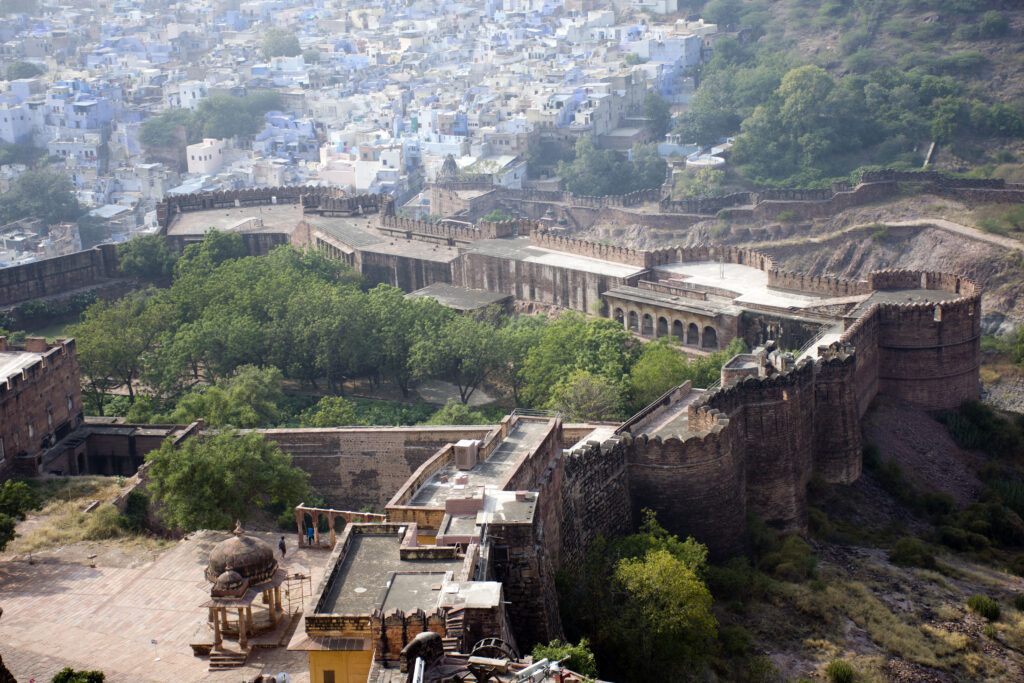
The first glimpse of Mehrangarh we got while returning from the safari. It just appeared for a moment in front of us through a gap among the cross roads. Then again we saw it all lit up in evening from Sardar market. The magnificence is in its imposing nature – the city feels guarded, sheltered and guided by its sheer presence.
Mehrangarh and Jaswant Thada are situated on the same hill. This hill raises through the old walled city. The boundary wall encompasses the entire old Jodhpur. Distance between Mehrangarh parking and Jaswant Thada is around 500 meters. Road is downhill here, but we got so tired after visiting Mehrangarh that we went to Jaswant Thada on next day only — which means, crossing the entire approach route once again.
Mehrangarh means the Sun Fort (Mihir in Sanskrit and broken as mehran in local dialect means sun and garh means fort). The fort is of 500 meter height. There is a lift to go up and down almost till top 3rd floor or so. We took the upward ticket for the lift and came down all the way by walk.
There was a single rock from bottom till the canon terrace of the fort. This rock was drilled to install this lift sometime in 1970s. It carries around 6 persons in single flight. So queue to lift remains long almost always.
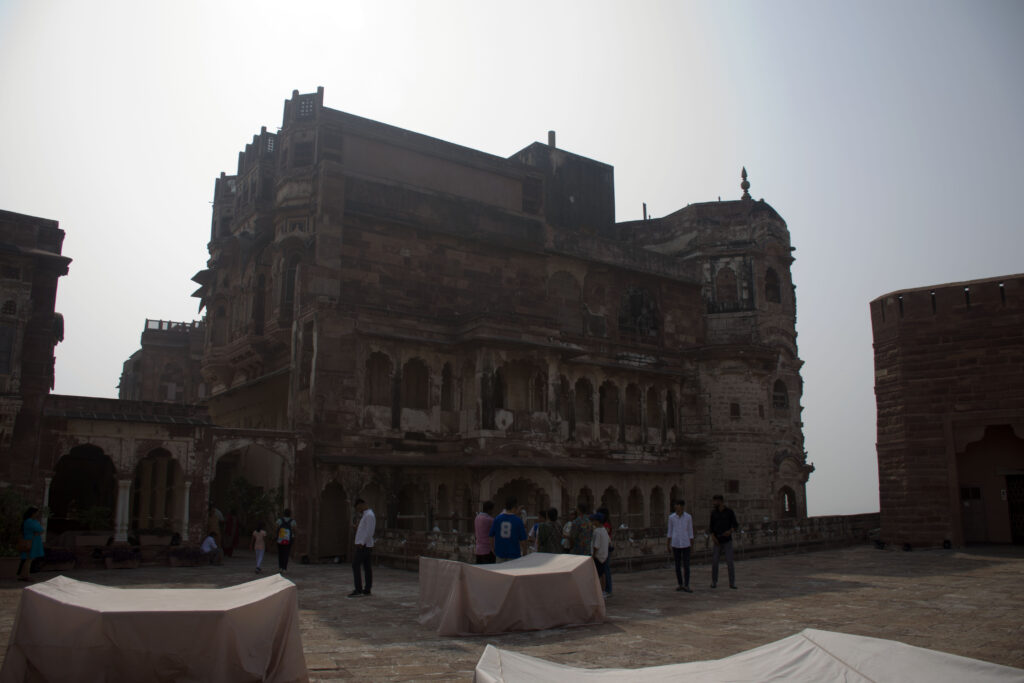
Once up on the canon terrace, you are free to roam the fort on your own. From this terrace ones gets a bird’s eye view of the city spreading from the foot of the fort. It was comfortable during the noon time in late November and there was a mild breeze blowing through our hair. This terrace is one of the idyllic places inside the fort where one can sit an relax as long as they want.
You might have seen a wooden wheel high above you hanging from a wall when you entered the fort. You might also have come to know that this wheel was used to draw water up. Now, from this canon terrace, you see the wheel hanging just outside the guard walls and you wonder how much high have you come up.
The ways to navigate the remaining parts of the fort are all marked so that no one gets strayed. From the terrace you come through a corridor and then onto a courtyard. There is a hall housing a small museum. Some beautiful and realistic articles are displayed here.
This courtyard is another idyllic place to sit and spend time to yourself. The view here consists of the two palaces on either side of yours and sky above you. To keep you company, kites and swifts of the fort will be always there.
After here, comes a maze of steps and corridors and balconies to take you through more halls and steps and corridors and balconies showcasing the erstwhile royal luxury. At some points, you will wonder about the opulence, and sometimes about the needs and at some other moment about the stamina of the original residents of this sprawling structures.
Throughout this walk, there come a lot of nooks and corners from where you can catch unexpected glimpses of the surrounding — may it be the city down or Jaswant Thada or some other parts of the fort itself. From some gaps somewhere you can touch the high outer walls of the palaces. The cool red sand stone gives both thrill and chill.
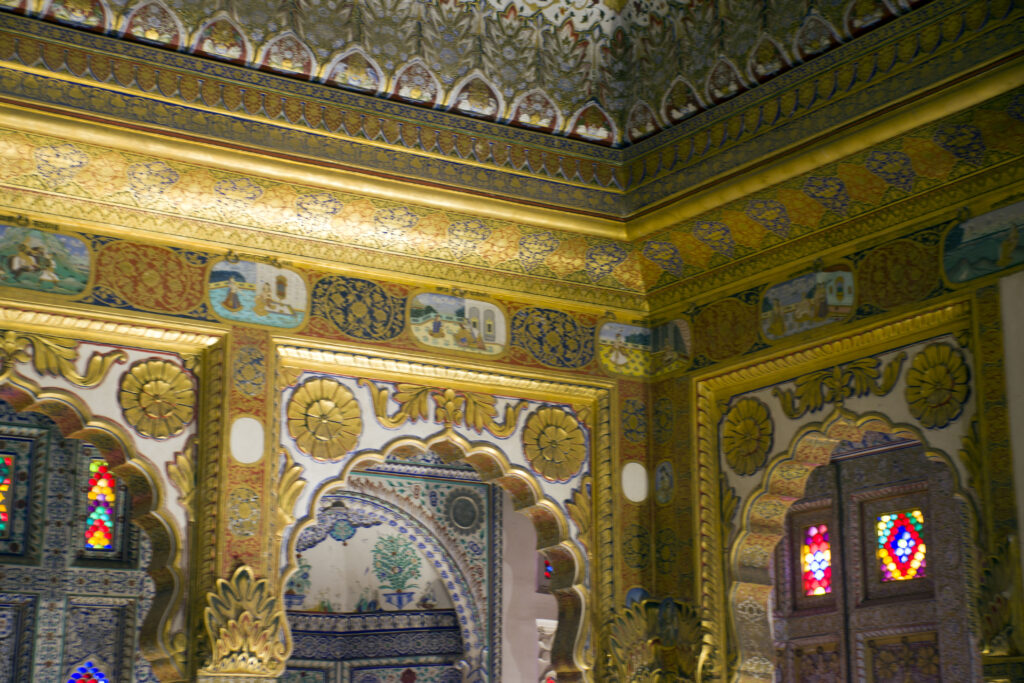
Concrete, marble and red sand stone are used as and where required. The guarding gates (pol) are all wooden and spiked with iron nails. This is to prevent gate breaking using elephants. All these gates are placed after a sharp turn from the road that goes up and down the fort. This is to prevent gate breaking by rams.
A unique idea of colorful lighting of one room was very interesting. Glass globes of different colors and sizes are hanged from the ceiling. Thus, when candles are lit on the floor, the room will be filled with colorful lights. The real Rang Mahal. There are all these Moti Mahal (pearl palace), Baadal Mahal (cloud palace) and the courtyards that you will walk through in the course of the route.
The walk ends at a courtyard which is the last lazying place inside. The hall on one side of the courtyard has colorful glass windows of symmetric geometrical shapes. It gives out an aura of dream window, something like you always wonder what could be there behind those glasses.
Throughout the fort, wherever you get to look up, there are jharokhas — the ornate hanging windows — everywhere. You wonder from where all the purdah ladies could watch over their subjects.
The exit from this last courtyard leads to another courtyard with disco balls hung on four high wall corners possibly to be used during festivities. This courtyard looks sturdy and less ornate. Washrooms are built over here for visitors inside some old rooms. From here while exiting, you can visit the over priced souvenir shops if you wish so.
Then the road, that we avoided while going up and took lift instead, leads you down to the parking through all the guarding gates. This road is all stoned one and very steep at several parts. The elevated platforms on both sides of this road were probably used as markets during the kingdom era. As you cross each gate (pol), you slowly come out from the layered protection of the core. The feel of walking down such street is somehow compelling.
Food is not allowed inside Mehrangarh. The bags are frisked and any food item is taken into custody at the entry. There is a cafe, but they charge a lot. So time your visit accordingly. It takes around 2-3 hours to visit this place including lift queue on a normal day and some time around 11 am.
As told before, we got tired after visiting the fort and decided to head for lunch directly to Turji ka Jhalra area. We took an auto for this. The route from fort to Turji ka Jhalra is definitely through the old city. The narrow lanes, by-lanes, hanging balconies, old houses, steep architecture — everything comes into life during this short travel. Inadvertently and many of the times unknowingly, you would definitely peep into someone’s courtyard, or door, or steps just to get a glimpse of the old styled houses. It’s captivating.
Toorji Ka Jhalra Bavdi
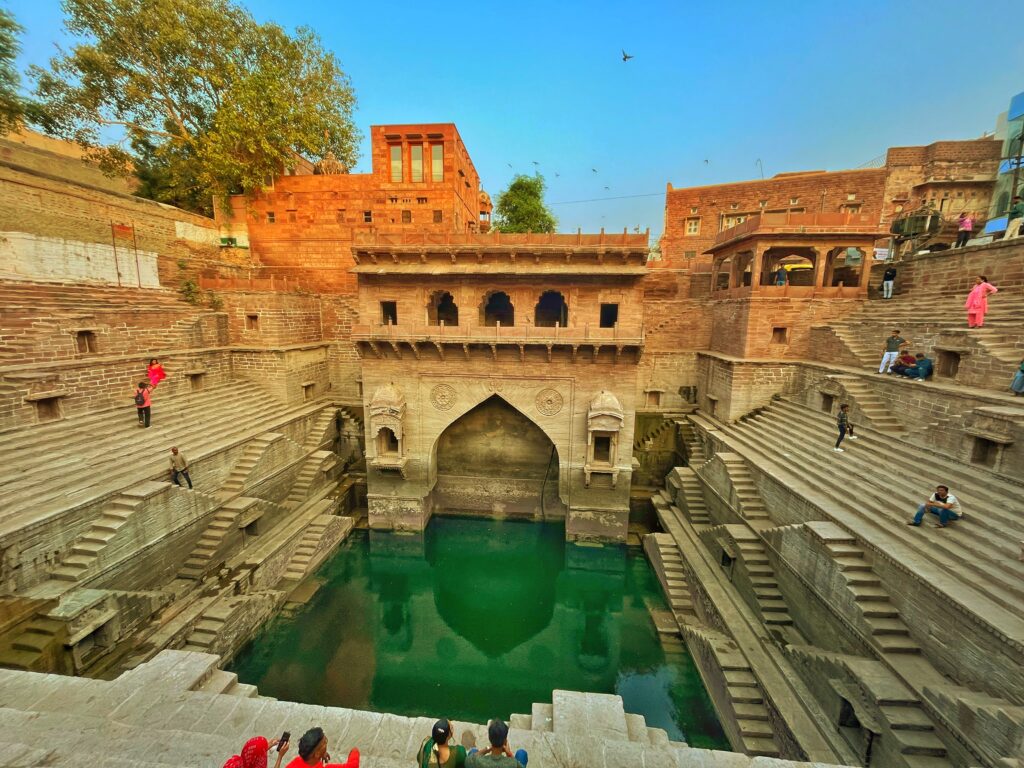
We took a very late lunch at stepwell cafe beside Turji ka Jhalra. The atmosphere and the food both are charming, though this place is a bit pricey.
This stepwell gives out an ever-free-spirit vibe in the city. The splashing sounds meant boys were jumping into the water from various platforms of various heights around the stepwell. There was a small group of boys continuously singing and playing guitar on the steps. It’s a must visit place for some soothing experience.
Turji ka Jhalra used to provide drinking water to the old walled city of Jodhpur before modernization. It is built in such a way that from various sources, water trickle down into it. Even today, you can see from some corners, water is trickling in.
It’s here, that my daughter lost her first tooth at the age of 6 years and 4 months.
Map shown it’s 350 meters from here to Ghantaghar. Wow, that’s good. So we started walking through the lanes following the map. Within 2 minutes we realized, it’s better to ask the locals for direction instead of relying upon the mobile network inside the maze of lanes.
After getting the road heading to Ghantaghar and walking a bit down, we came across a shop selling only silver jewellery. This is Banjara. We were not aware of this shop, but it came out a nice stop. I took some silver earrings. Here I got recommendation of Bibaji bangle shop for 2nd time (the 1st one was from Mr. Vikram Rathore from Magan Niwas). Hence, Bibaji became a let’s see spot for us.
We walked to Bibaji, a small shop, overflowing with bangles boxes piled outside and neatly arranged plethora of bangles inside. A lot is available in internet about Bibaji, so I am only saying, just visit them once, if you can. As mostly, you’ll be visiting them again. We took bangles of glass, crystal, onyx, blown glass, lacquer, resin and metal from here. You should see the craze Bibaji holds for locals. On and off local ladies of every age group visit the shop and don’t mind spending nice amounts on bangles from Bibaji. The shop is truly an art-into-life experience.
It was not very late, but we were all tired. So before finally heading to Magan Niwas, we took a try to recharge ourselves at Shri Mishrilal sweets just inside Ghantaghar courtyard walls.
Makhaniya Lassi
This small sweet shop is famous for their makhaniya lassi. It is just inside the entrance gate of clock tower courtyard and tucked on the courtyard boundary wall itself. The steady crown in front of the shop denotes its location, otherwise, this joint is very easy to miss.
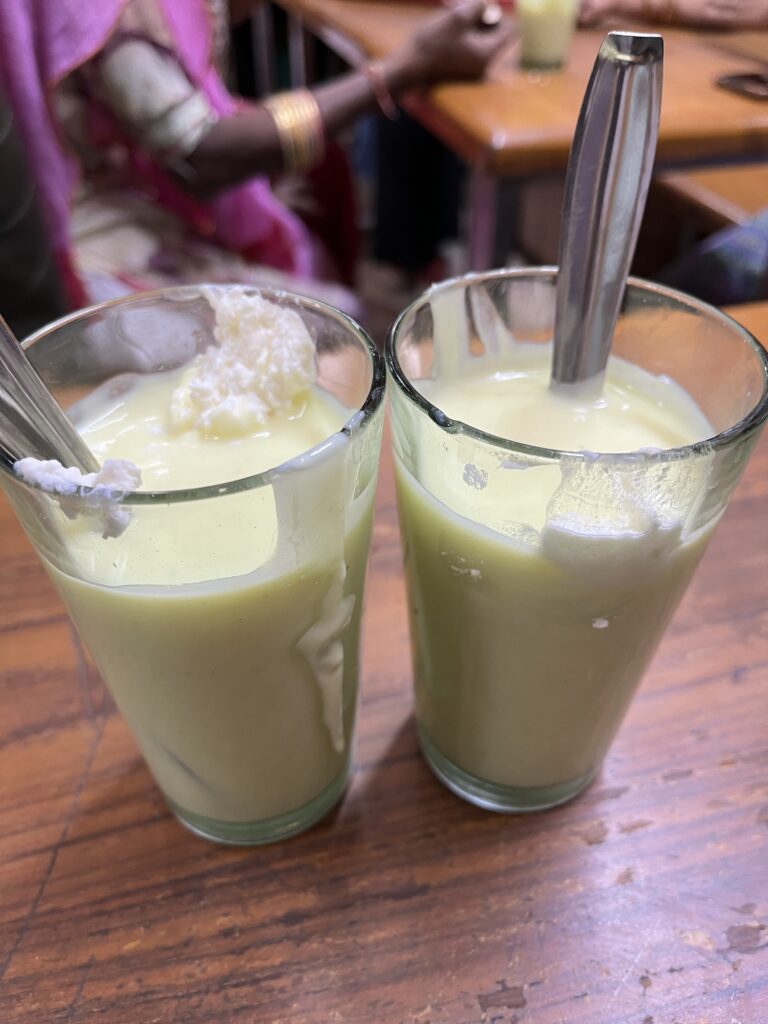
Being a very busy shop though did not make them compromising with the quality of food there. Makhaniya lassi is a cream heaved lassi with heavenly taste and refreshing characteristics. A glass of this beverage is heavy enough to keep you going for next another hour. They have some other flavors also in lassi and typical snacks items like kachori, bada, samosa etc. Food is good here, no doubt.
We headed back to our hotel to a delightful thali for dinner.
Jaswant Thada
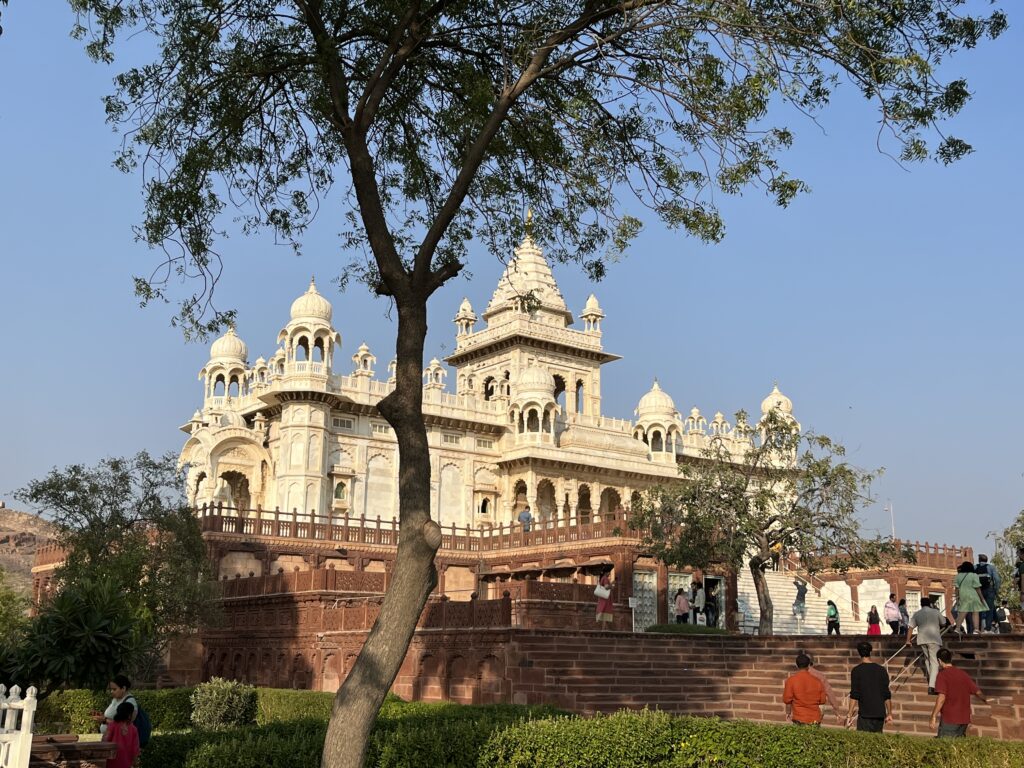
We spent 3 days in Jodhpur and we were yet to go to Jaswant Thada. So on our last day before heading to Jaisalmer, was the day for Jaswant Thada. This being the only place to go that day, we took the day more leisurely that last 3 days. Sandeep and Tepu kept haggling on who should do what first, their typical. I took bath and went out with Mr. Rathore to the safa factory at the end of the lane.
Safa is the Jodhpuri turban. Previously one day while roaming in the market, I came across a shop that sells only safa, in wholesale. The vibrant colors of the fabrics piled around such shop gave me some psychedelic effect. I was aiming for this since then, but for obvious reasons, didn’t dare to try a wholesale shop.
Mr. Vikram Rathore came to my rescue when I told him my interest into this. He took me to the factory nearby. Safas are made there, dyed there and collected from elsewhere also there. It’s a family owned business inside a family home. This place became one of my most cherished place in this trip. There is nothing to talk about the riot of colors inside. And there are several materials from what safas are made. I chose all hand dyed items in cotton – leheriya and bandhni. And there I took two thin zari incorporated safas also where handmade work was not there. My total purchase was of 10 safas. Yes, it sounds crazy, but I wanted these to make things out of such colorful materials. As these were taken directly from the factory, overall cost came somehow less that market shops, which is a bonus.
Finally we were out on our last destination in Jodhpur this time – Jaswant Thada. It’s basically a cenotaph or chhatri of royal history. The main chhatri is completely made of white marble. There are some more chhatris in the premises, of red sand stone. This memorial is of quite a recent past and carving is not much of high profile throughout the settlement. Still the sheer use of marble gives the place a cool serenity. The view of Mehrangarh from here during a coming fall evening, is almost dreamlike. This is a good place to sit and spend some quiet time.
Just out of Jasawant Thada gate is Rao Jodha Desert Park gate. This trail starts from the fort and ends here near the pool at the bottom of Jasawant Thada.
The Blue City
We took an auto to go to Pachetia hill bottom from here. this route takes you into the famous mazelike blue city of Jodhpur. We got down in a lane that is lined with lacquer bangle makers’ workshops. The craftsmanship and the outcome of such smooth effort are something to behold for sure. After spending some time with a karigar, we walked to the hill.
Pachetia hill is at the foot the fort. Where the habitation ends, a trail goes high to a temple and up towards a flat hill just below the foot. This is a vantage point to witness sunset in Jodhpur from a good height as the fort closes at sunset. The lane leading the hill are lined with walls with colorful graffiti. It’s good to see, but it is a bit overhyped location that comes in internet.
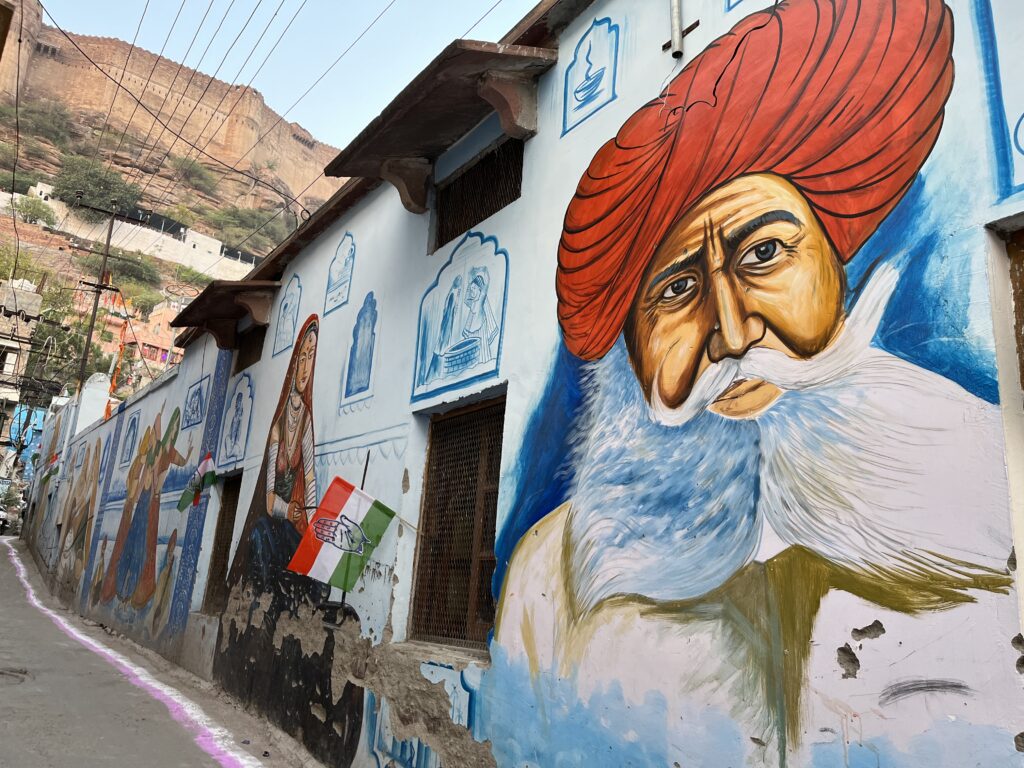
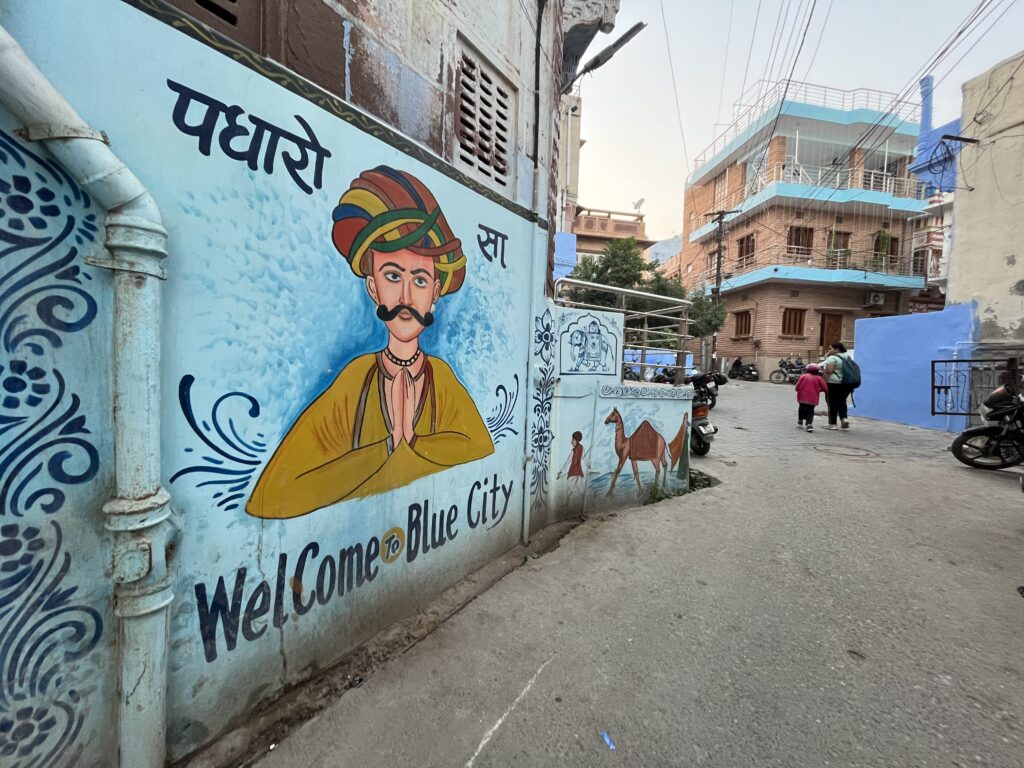
The beauty of this area is the real blue city of Jodhpur. The mazelike lanes are all meeting at chowks, or small yards. Then again after some more lanes’ maze, there comes another chowk. Houses around here are all of old architecture – steep and narrow stairs, carved wooden doors, glimpses of a cozy hallway or room or courtyard inside the centuries old settlement. Altogether, this place brings the awe of a bygone era, where lifestyle used to be different. But somehow, the essence of those long gone days is still here. By and large, nice to have a look as an outsider.
What you should really take care here is not to venture too deep into the mazed lanes. Mobile network is very unpredictable here and chances of getting lost are good. All you can and should depend on locals to tell you the way out to the main road. Most of them are really helpful.
We had a plan to visit Bibaji again today. While coming here we just crossed the shop and we saw the straight road brought us to our dropping point. So we directly took to walk back to Bibaji. After a bit of walking, there came a V point. We took one arm to the left and decided it wrong and took the right arm. All we were expecting was the bangle workshops on the street. These are the same workshops that the Banjara silver shop man told that if you walk beyond Bibaji, there are all bangle makers. So all details and directions are known to us. What was not known properly is that, how each street exactly look like. And that was the key point. So our ‘corrected’ right arm of the V took us into a perfumery market. And we realized with ‘wow’ ‘aha’ and all that we knew nothing of this place.
At the end of the street we cam at a cross road from where a road was understood leading to ghantaghar. I just stopped there and asked a shopkeeper what is that road towards my left – that is, away from ghantaghar and towards the fort? “Oh, it’s Manak Chowk”, he told. That was a wow moment, because Manak Chowk means Bibaji.
We just walked the past the joining by-lane and reached at Bibaji. Now, just while turning the corner of the by-lane, there came Raju Namkeen that was mentioned and location detailed by Banjara silver. So everything that you heard while roaming in the market, comes to you one by one after you have forgotten about them. This is so mesmerizing about Jodhpur.
The lady in Bibaji mentioned to her son, the 5th generation business holder, “they are they who came yesterday at the same time”. The statement itself was kind of taken from a fable.
Some time at Bibaji, some phone numbers given and taken with then unknown ladies, another makhaniya at Shri Mishrilal, a bit of last minute gift shopping, and heading back to Magan Niwas. We’ll pack and keep majority of our luggage in the hotel and head for Jaisalmer. This is better as we’ll spend our last night in Jodhpur before catching a Sunday morning flight at Magan Niwas itself. So we segregated, packed, stowed away the luggage and fell into slumber.
And we needed a sound sleep for the journey tomorrow.